A text from a number you do not recognize
By the StoryCheck team · 5 min read · Published August 18, 2026
Texts from unknown numbers fall into four groups, and the difference matters because one of them is designed to start a conversation rather than get a click. Replying is what it needs from you.
The link text
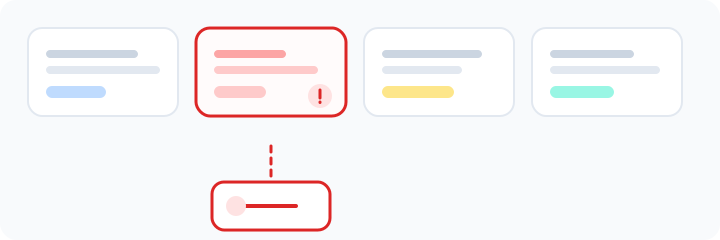
A parcel, a refund, a benefit payment, always with a link and a deadline. This is the most common kind and the easiest to handle: do not tap the link, and check the claim through the official site you type in yourself.
The wrong number opener
A friendly message clearly meant for somebody else. Hi, are we still on for Thursday? It is not a mistake, it is an opener, and the intended reply is you politely saying they have the wrong number. That reply confirms a real person reads this number, and the conversation that follows is the actual product, usually ending in a cryptocurrency pitch weeks later.
Do not reply to correct them, and do not use the unsubscribe word in an unsolicited text. Both confirm the number is live, which is the only thing the sender wanted.
The impersonation text
A message claiming to be your bank, the CRA, or an Interac e-Transfer that needs you to sign in again. The e-Transfer version is the costly one in Canada, because the page it links to looks exactly like your bank's login. Complete transfers only inside your own banking app.
The genuinely mundane
Some unknown texts really are a courier, a clinic, or a contractor using a personal cell. They tend to name the specific thing: your appointment, your job, your address. If you want to know which one you are holding, a reverse lookup tells you whether the sending number is a real cell, a VoIP line, or a number with no history at all.
| What it looks like | What it wants | What to do |
|---|---|---|
| Parcel or refund with a link | A tap, then your card details | Do not tap. Check on the official site. |
| A friendly wrong number | A reply, to confirm you are real | Do not reply at all. Block and delete. |
| An e-Transfer needing a sign-in | Your online banking credentials | Only ever sign in from your own banking app |
| Bank or CRA wanting a code | The code, which authorizes a payment | Never send it. Call the number on your card. |
| Names a specific job or appointment | Usually genuine | Verify against your own booking, not the text |
Common questions
Is it safe to reply and say wrong number?
No, and this is the most common mistake. A polite correction is still a reply, and it confirms a real person reads the number. Block and delete instead.
What if I already replied?
Nothing bad happens immediately. Stop responding, block the number and expect more contact attempts, because the number is now marked as active.
Does opening a text do any harm?
Opening it is fine. Tapping the link, installing anything, or entering details on a linked page is where the harm starts.
Related guides
Find out who is really behind the number
The check is private and takes about 60 seconds. The person is not notified and never finds out you looked.
Check a number now