Whose email address is this?
By the StoryCheck team · 5 min read · Published August 18, 2026
An email address gives up more than people expect, but the useful information is not where most people look. The display name is the least reliable part of a message, and the domain is the most.
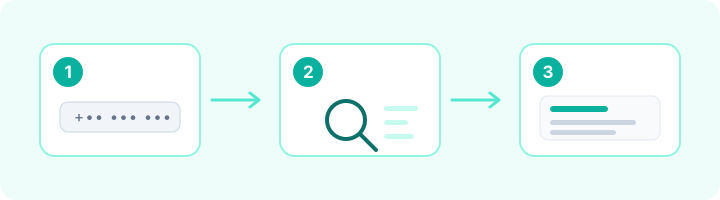
Search the address itself
Put the whole address in quotes in a search engine. Work addresses surface quickly through staff pages, listings, conference programs and public documents. Personal addresses on the big free providers surface far less, because they were never published anywhere.
Read the domain
This is the check that catches most fakes. Read the part after the at sign character by character. A real organization uses its real domain. A scam uses one that is close enough to pass a glance: an added word, a swapped letter, a different ending. A domain registered a few days ago, sending you an urgent message, is about as clear a signal as exists.
The display name on an email can be set to anything at all. Judge the address, never the name shown above it.
Check breach history
Where an address has appeared in known data breaches tells you which services it has been used with and roughly how long it has existed. An address with no history at all, contacting you out of the blue, was very likely created for that purpose. An email lookup pulls these together into one private report.
| Where to look | What it gives you | The limit |
|---|---|---|
| Searching the address in quotes | Public profiles, posts, listings | Personal addresses rarely surface |
| The domain | Whether the organization is real or the domain is new | Watch for near-identical spellings |
| Breach history | Which services the address has been used with | Nothing shows if it was never breached |
| Username matching | Same-name accounts on other platforms | May be a different person entirely |
| Message headers | The server that actually sent it | Not shown in a normal inbox view |
Common questions
Can I find out who owns an email address?
Often. Public profiles and listings using the address will surface, along with domain age and breach history. Work addresses give up considerably more than personal ones.
Will they know I looked?
No. Nothing is sent to the address and no notification reaches its owner.
What is the single fastest scam check?
Read the domain after the at sign, character by character, and check how recently it was registered. Those two things catch the majority of impersonation attempts.
Related guides
Find out who is really behind the number
The check is private and takes about 60 seconds. The person is not notified and never finds out you looked.
Check a number now